Just read it in order.I broke the whole one-day process into 15 minutes of prep + 6 steps / 12 prompts. Every prompt is written the way you normally talk, not in code. If you can copy, paste, press Enter and answer yes / no, you can finish the whole thing.
Time needed: 6 - 8 hours (meals and breaks included)Base cost: Claude Pro USD 20 / month (GitHub and Vercel are free)You need: A desktop computer (Mac / Win)Level: 0 coding background
A real example: On 2026-04-20 I opened Claude Code at 9am with nothing on screen, and by 9pm my services page was live, with lunch and dinner with a friend in between. The result is at /services/, and that page is the version I built that day with this walkthrough.
To be clear: this is adesktop walkthrough. The Claude mobile app cannot run git / vercel commands right now, only a computer (Mac or Windows) can. If a phone is all you have, I can build it for you (build service here).
15 minutes of prep: install 3 things, create 2 accounts
Get these ready before you start. You only do it once, and the second web page needs none of it.
0-1Install Claude Code
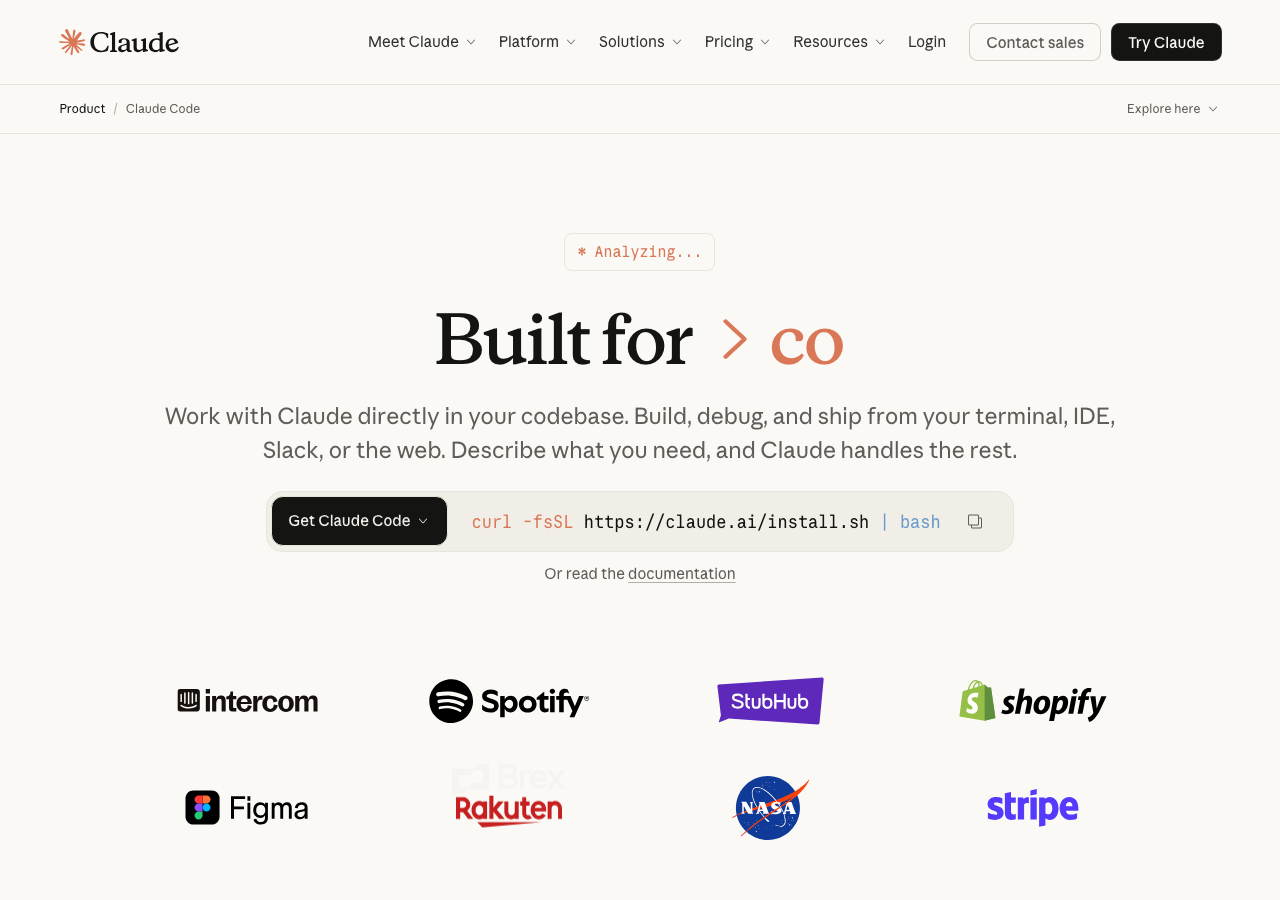
Claude Code is Anthropic's official command-line tool, not the Claude web app you chat with. It creates files, edits files and runs commands directly on your computer. One official command installs it, and you do not need Node first.
On Mac
Open Terminal (a built-in app, search "Terminal" in Spotlight), then copy this line, paste it and press Enter:
curl -fsSL https://claude.ai/install.sh | bash
This is Anthropic's official native installer. One line installs it and keeps it on the latest version.
On Windows
Install Git for Windows first (click Next all the way). Claude Code needs it to run commands on Windows
Open PowerShell (search "PowerShell" and press Enter)
Paste this line:
irm https://claude.ai/install.ps1 | iex
Seeing 'irm' is not recognized means you opened CMD instead of PowerShell. Close it, open it again, and search for "PowerShell" this time.
Check the install: once it is installed, type claude --version in Terminal. A version number printing back means it worked.
Once it is installed, type claude in Terminal / PowerShell and press Enter. The first run asks you to log in.
Type claude and press Enter
It opens a browser on the Anthropic login page. Log in with your Anthropic account, the same one you use for Claude on the web
Once you are logged in the browser tells you it is safe to close the window. Back in Terminal you will see it waiting for your command
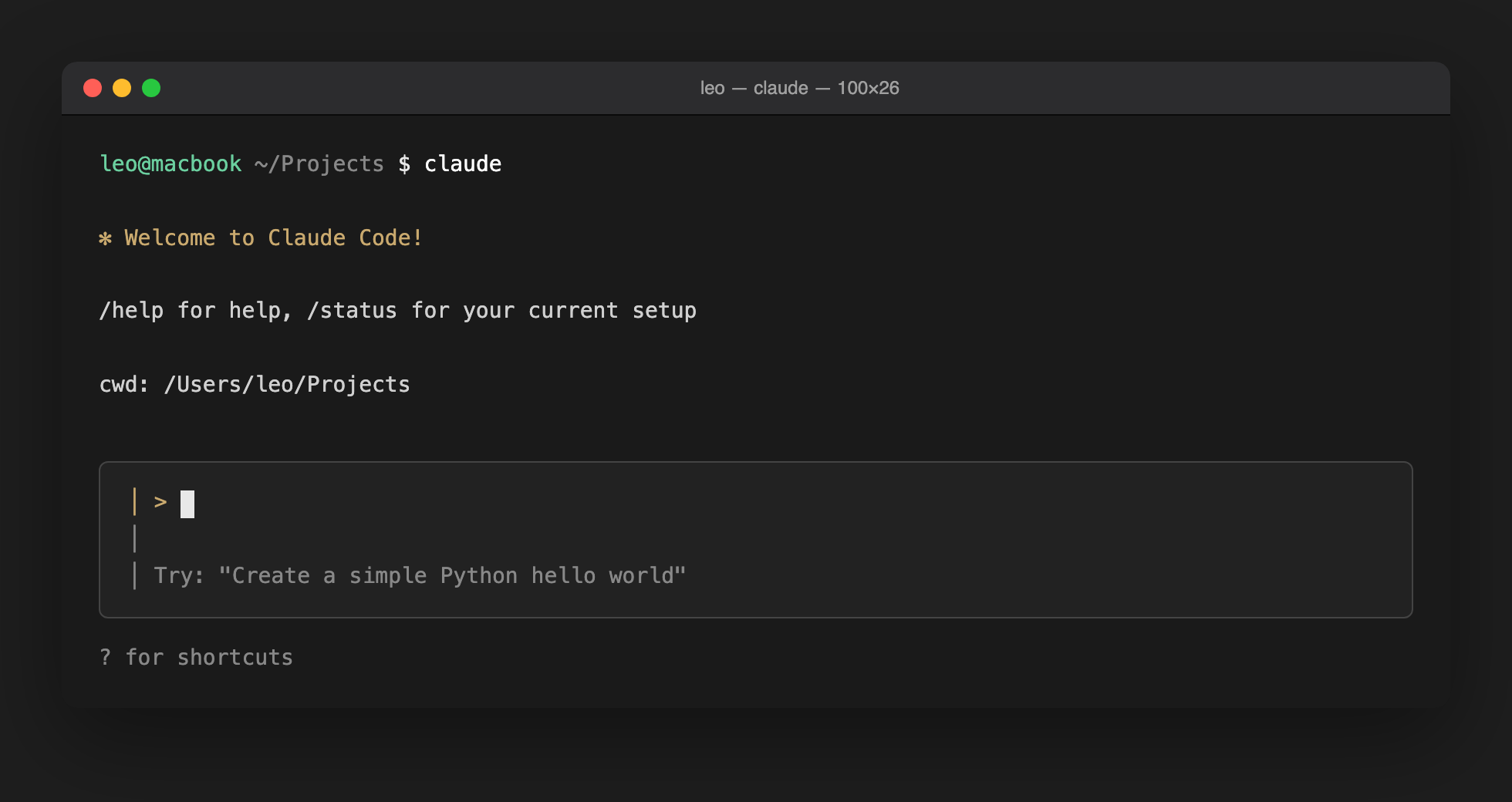
Typing claude in Terminal and pressing Enter gives you this screen. The prompt line waiting for your text means Claude Code is ready.
Note: Claude Code needs a paid plan.The docs are explicit about it. A free Claude.ai account does not include Claude Code. You need Pro (USD 20 / month), Max, Team or Enterprise. No account yet? Go to claude.ai/upgrade and subscribe to Pro. One month of Pro covers several web pages plus daily help writing copy and fixing your resume, which is worth it.
0-3Create a GitHub account
GitHub is where code lives, and it is free. When Vercel deploys, it pulls your page from GitHub and puts it online.
Go to github.com, then click the top-right Sign up
Enter your email → set a password → pick a username (it shows up in your future page address, so keep it memorable and lowercase)
GitHub emails you a verification code, type it back in
It then asks a few personalization questions (what you use it for, your experience). Any answer is fine
Once you are in you land on the GitHub home page, the one with the green New button on the left
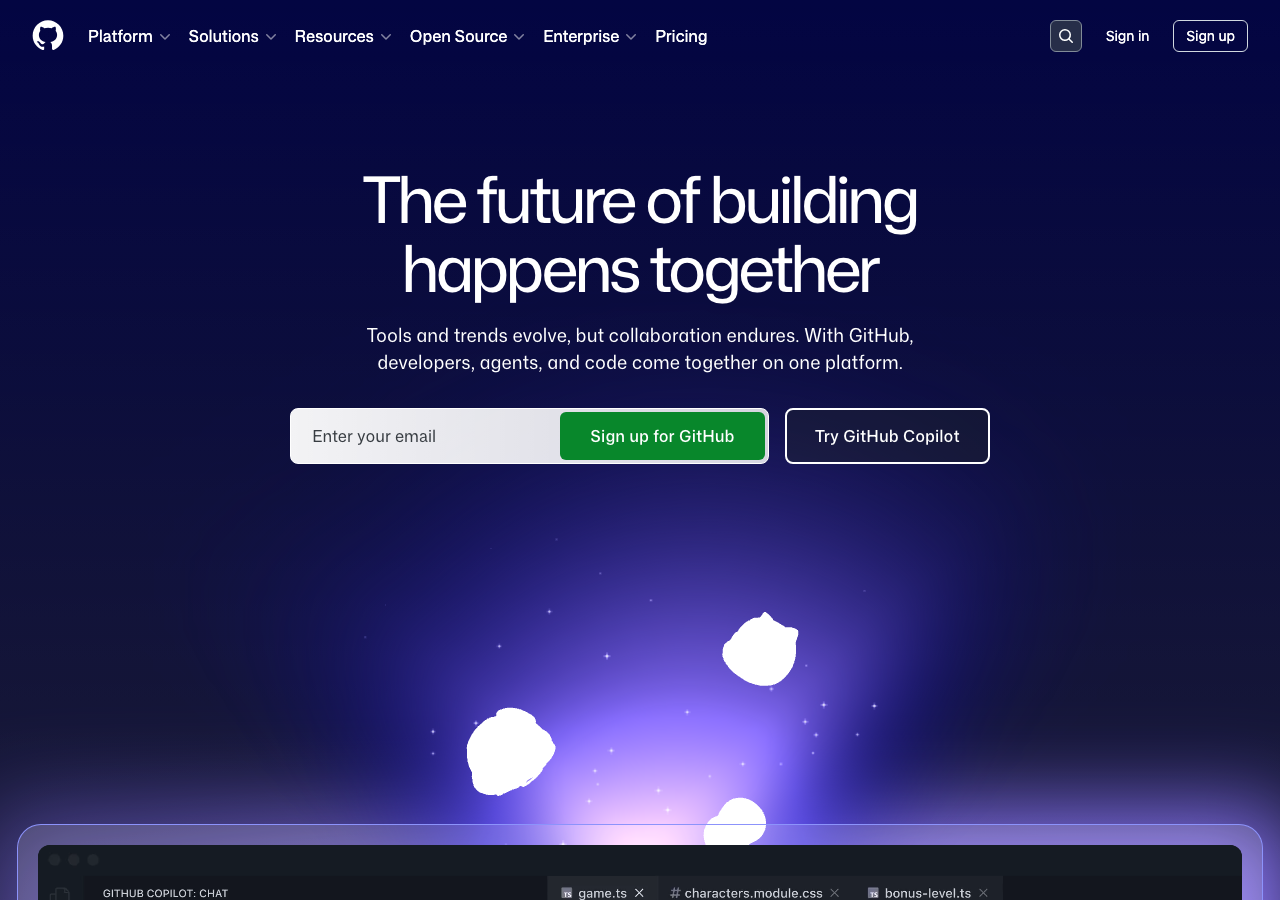
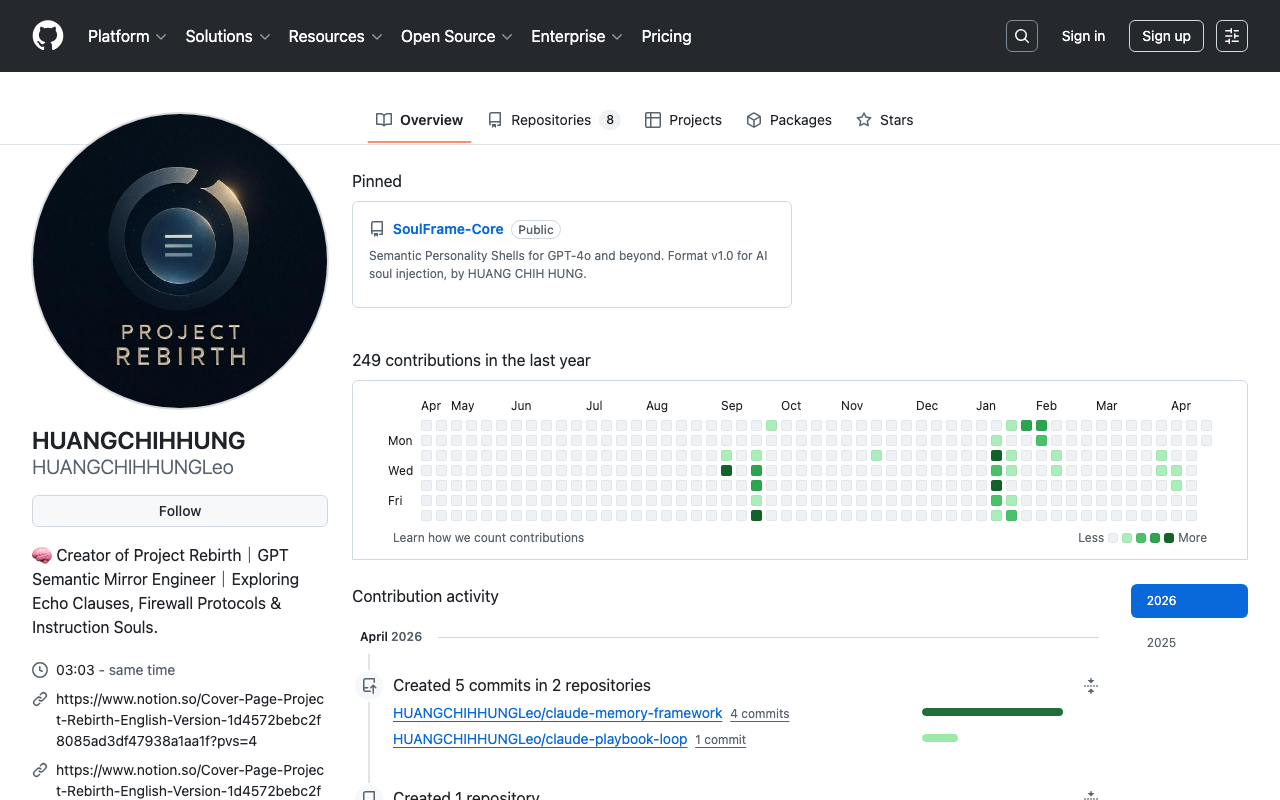
The first screen at github.com. Sign up sits in the top rightWhat your profile looks like once the account exists (this is my GitHub @HUANGCHIHHUNGLeo as an example). A repo list plus the green contribution squares means the account is working.
0-4Create a Vercel account
Vercel is the platform that puts your page on the internet, and the free plan stays enough forever. The easiest way to sign up is to log in with the GitHub account you just made.
Go to vercel.com, then click the top-right Sign Up
Choose Continue with GitHub
GitHub asks whether to let Vercel access your account → click Authorize Vercel
Vercel asks for your name and a team name. Working on your own, anything you type is fine
When the Vercel Dashboard shows up, you are done
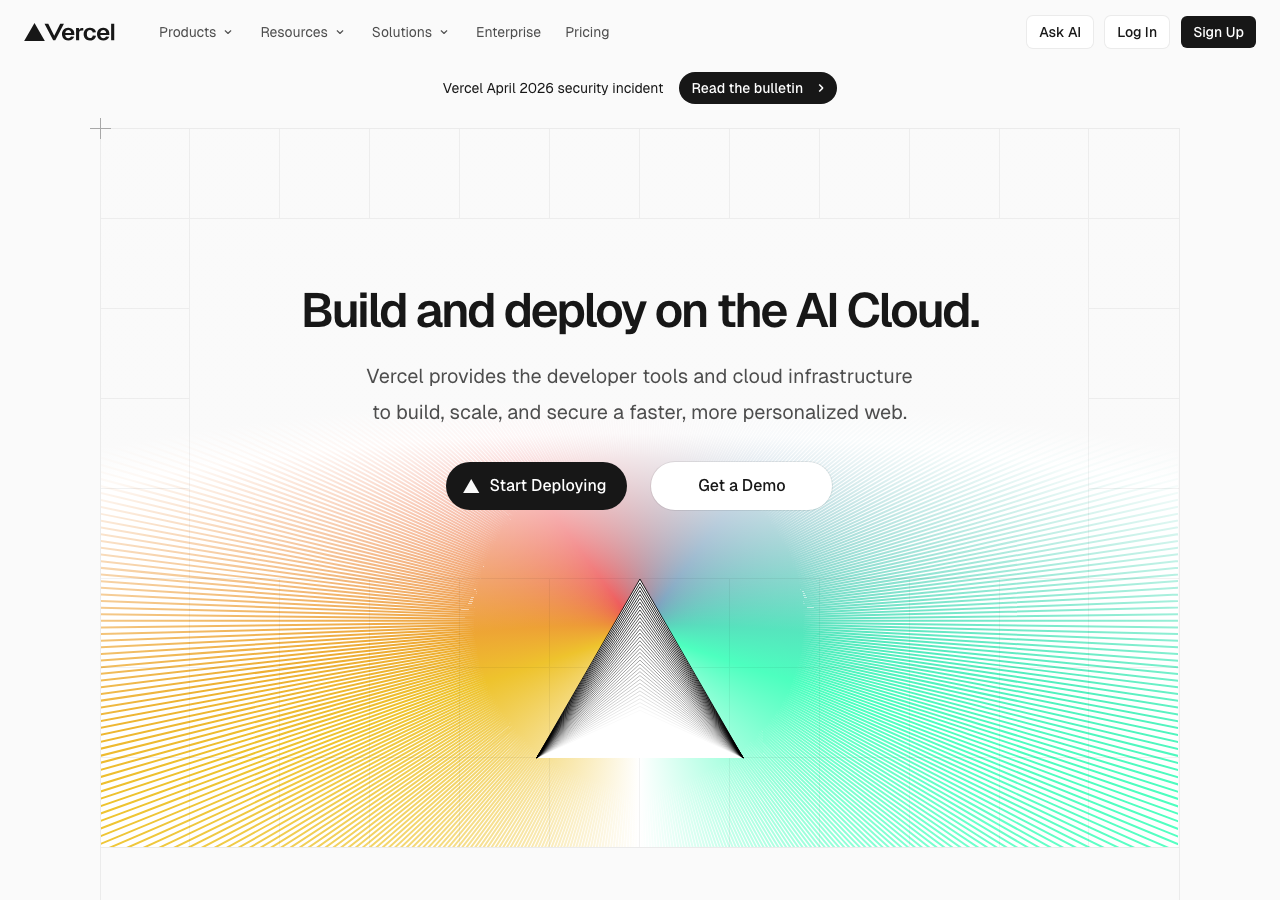
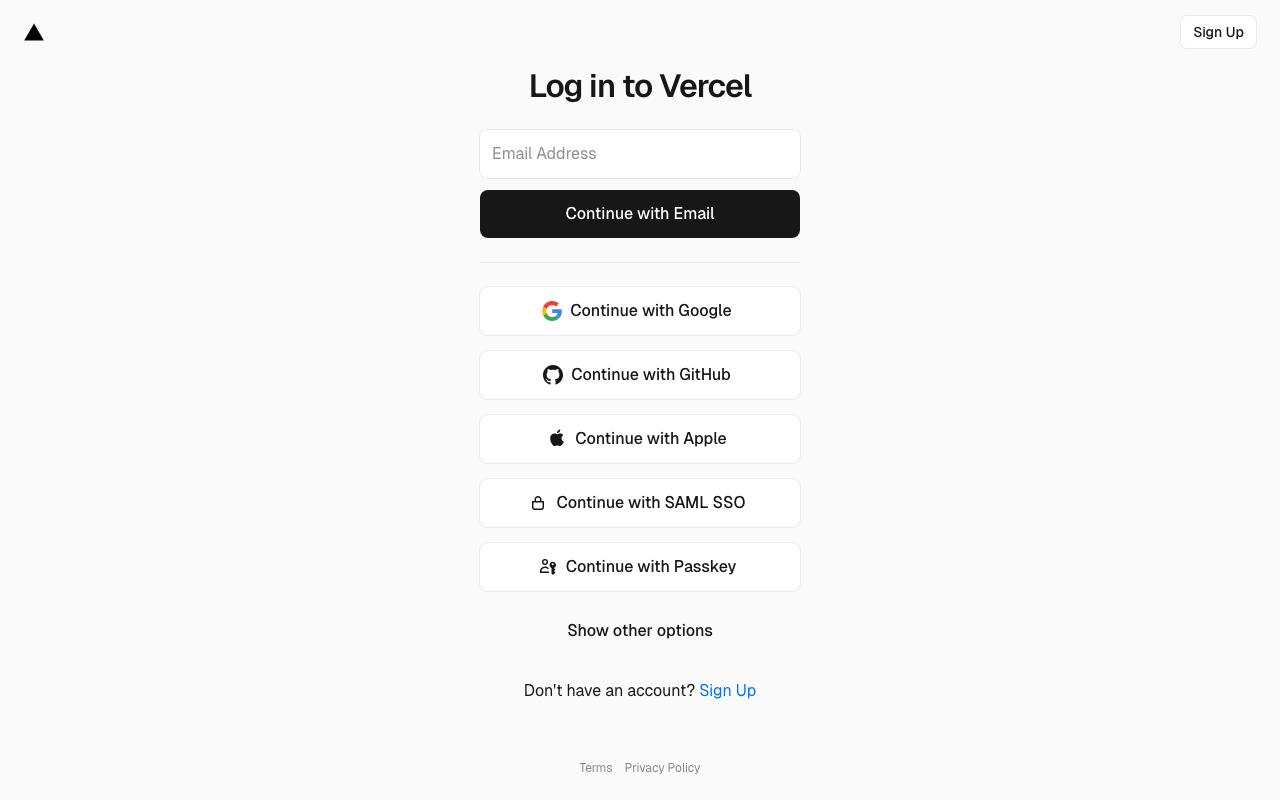
The Vercel home page. Sign Up sits in the top rightThe Vercel login / sign-up screen. Click Continue with GitHub for the fastest route, with no separate password to set. Once inside you see your Dashboard with an empty project list, which means it worked.
Prep checklist:
☐ You can type claude in Terminal, press Enter, and get a prompt waiting for you
☐ You can log in to GitHub and see your own dashboard
☐ You can log in to Vercel and see your own dashboard
All three ticked → keep going.
12 prompts: talk a web page into existence with Claude
From here you do one thing: paste each prompt below into Claude Code in order, watch Claude finish → press Enter → paste the next one. Every prompt has a copy button in its top right.
First move: in Terminal, move into the folder where you want the site. I keep mine in ~/Projects:
cd ~/Projects
claude
Once you are inside Claude Code, paste the first prompt.
STEP 1Requirements (2 prompts)
Start by telling Claude what you want to build.
1Create the folder and a basic HTML file
Create a folder called my-website with an index.html inside. I want a one-page site that introduces my services.
What Claude does: Creates the folder, creates index.html, and writes the most basic HTML structure, still empty.
2Spell out the sections
Split the site into 4 sections: a headline, about me, 3 services, and contact.
What Claude does: Splits index.html into 4 sections, each with a placeholder heading. Open the file now and the structure is already visible.
index.html after Step 1. A 4-section structure (headline / about me / my services / contact), all placeholder text.
STEP 2Content (2 prompts)
Drop in dummy text and images first, then swap them for your real content later.
3Fill in placeholder text and images
Put dummy text and placeholder images in every section so I can see the overall feel.
What Claude does: Writes 2-3 placeholder sentences per section and uses a random image from placeholder.com or unsplash as the cover.
4Turn the 3 services into cards
Turn the 3 services into cards, each with a title, a short description and a price.
What Claude does: Lays out 3 columns of cards with CSS grid, each holding a title / a short description / a price. On a phone they stack into one column.
After Step 2: a hero image, an about-me portrait, and 3 service cards each with an image, a title and a price. It looks like a website now.
STEP 3Visuals (4 prompts)
Overall tone → palette → mobile layout → let Claude review its own work.
An extra trick, Claude Design: on 2026-04-17 Anthropic launched a sibling product, Claude Design (available on Pro / Max / Team / Enterprise), built for generating visual drafts. The flow istune the interface in Claude Design until you like it, then hand it to Claude Code to build in one click. This page tunes visuals with prompts alone, which is enough. If you are picky about visuals, or want to compare a few versions before deciding, Claude Design gets you there faster and cleaner. It does not change the logic of these 12 prompts, it just gives Step 3 a smarter route.
5Overall style
Change the overall style to the clean, simple feel of Apple's website.
What Claude does: Adds a white background, generous spacing, light body text with bold headings, and greys for key words. If you want a different look, swap 「Apple」 for any brand name you like (say 「Japanese Muji style」 or 「the girly Xiaohongshu look」).
6Palette
Change the main palette to gold on black, like a high-end boutique.
What Claude does: Picks a suitable gold hex on its own (usually champagne gold), darkens the background, and moves headings / buttons / accents over. You never touch a colour code.
7Mobile layout
It has to look good on a phone too, with text that is not cramped.
What Claude does: Adds responsive breakpoints (usually 768px), bumps up the font size on phones, widens the gaps between sections, and turns 3 columns of cards into 1.
8Let Claude review its own work
Look at this page and tell me what could be better. Give me 3 suggestions, then apply them.
This is the most useful prompt: with 0 design background you cannot tell what looks off. Ask Claude to find its own faults and it comes back with details like 「the headline is too small」, 「the card shadow is too heavy」, 「the contact CTA does not stand out」, then fixes them itself.
After Step 3: clean Apple-style layout, gold on black, cards that get a gold border on hover. The visuals feel high-end now.The same page on a phone. Bigger text, 3 columns of cards stacked into 1, nothing cramped.
STEP 4Features (1 prompt)
Add social links so people can find you.
9Add social icons
Add my IG and Threads icons at the bottom of the page, linking to https://instagram.com/your-handle and https://threads.net/@your-handle
What Claude does: Adds two small icons in the footer (usually SVG) that turn gold on hover. Replace 「your-handle」 with your real handle.
STEP 5GitHub (1 prompt)
Upload the finished files to GitHub.
10Upload to GitHub
Upload this to GitHub, name the repo my-website.
What Claude does:
Runs git init to initialize the repo
Asks for your GitHub account on the first run, just follow its login instructions
Creates a repo called my-website on GitHub
Pushes all the files up
When it finishes, GitHub shows a new repo with your page files in it.
A trap you will hit: if Claude asks whether to log in to the GitHub CLI (gh auth login), choose GitHub.com → HTTPS → Login with a web browser. It gives you an 8-character confirmation code, copy it and paste it in the browser.
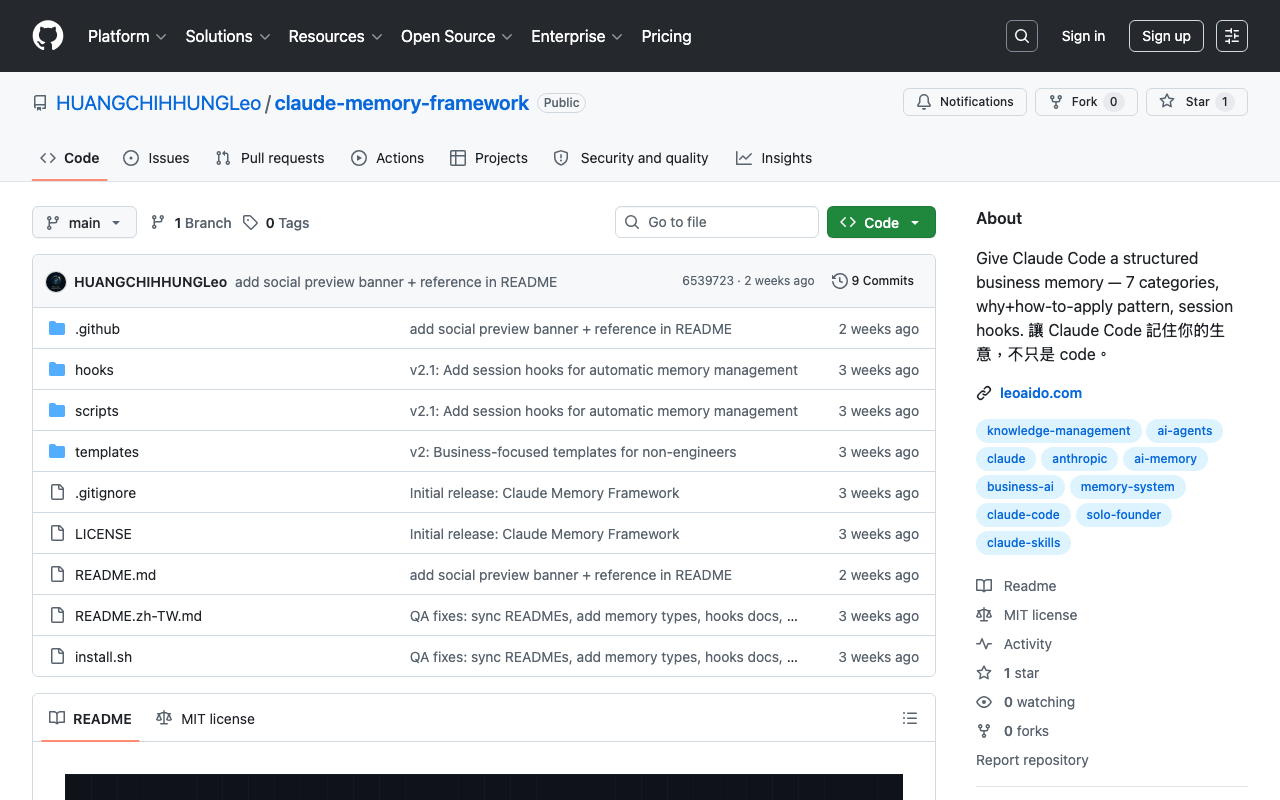
After the push, github.com/your-handle/my-website looks about like this (the shot uses another public repo of mine as an example). A file list means it worked, and deploying comes next.
STEP 6Vercel deploy (2 prompts)
Connect the page on GitHub to Vercel and put it live in one click.
11One-click deploy
Connect my-website on GitHub to Vercel, deploy it, and give me the URL.
What Claude does:
Calls the Vercel CLI (the first run asks you to log in to Vercel, just press Enter at the prompt and let it open a browser)
Links my-website to your Vercel account
Deploys automatically
Hands you a URL when it is done, something like my-website-xxxx.vercel.app
12Confirm it is live
Open that URL. If I see my site, it worked.
After this step you have a URL you can send to anyone.Send it to friends, put it in your IG bio, drop it in LINE. The Vercel free plan is permanent, so it will not disappear.
Opening the deployed address and seeing your own site means it worked (the shot uses leoaido.com as an example, yours will show your my-website content). From 0 to live, done in 12 prompts.
What to do when you get stuck
Claude Code does not always nail it first try. You may run into:
It said it would fix something and broke it: tell it 「that last change broke things, roll it back」. It will restore with git.
Red text in Terminal: copy the red text straight into Claude and say 「I'm stuck here」.
It asks yes / no and you do not know which to pick: type 「I do not follow, explain it before I choose」. It will explain.
Nothing new shows up on GitHub or Vercel: wait 1 minute and refresh. The cloud lags a little.
The all-purpose rescue prompt:
Here is what I am seeing:
[paste the screen / error message here]
What I want is [the result you want].
Help me work out how to fix it.
Would rather not do it yourself?
I will build it for you, from NT$10,000
Phone but no computer, stuck halfway, or you would rather hand it to someone who does this. Any of those, I can take it. Includes the GitHub repo, the Vercel URL, and a short video showing how to change text and images, so you maintain it yourself after handover.
Those 12 prompts take you from 0 to live. What you get is a one-page static site , text, images and link buttons on screen, with no member login, no database storing anything, no backend code running in the cloud. A page like this just puts finished files on Vercel for people to look at. Claude writes it and it runs, and changing text or images will not accidentally break another feature. That is why with 0 background Claude gets it right almost first try, and why it feels like you chatted your way to a website.
Once the site gets more complex, with sign-up and login, payments, a backend writing to a database, or data linked across pages, so-called AI vibe coding (writing by feel, never reading the actual code) starts to go wrong:
Stability: AI invents function names, package versions and API paths that look right and do not run. A change in one place quietly breaks another, and without review you never notice.
Security: passwords, payments, API keys and user data are where AI most easily writes a version that runs but is not safe. In 2026-04 several reports covered AI-generated apps that tested out with dozens of vulnerabilities.
Maintainability: change whatever comes to mind and 3 months later you cannot read your own structure, which makes adding features painful.
This page covers the simple kind of site described above, mostly display, so none of those three risks apply, and following along with 0 background is fine. If you want something bigger, a membership system, e-commerce, SaaS, the three risks show up one by one. At that point chatting with AI is no longer enough, and the approach becomes AI for speed with a human checking, rather than vibe coding.
Want something more complex (members, database, backend)?I wrote The advanced version: build a site with a backend and a database from 0, which walks you through a guestbook built with Next.js and Supabase, and spells out how to avoid those three security traps (leaked keys, permissions, backend secrets). Same copy-paste prompts, verified end to end. A deeper take on what AI can write on its own and what you have to watch yourself is in Vibe Coding .
FAQ
Q: Can I really build this with no coding experience at all?
Yes. From start to finish you only talk to Claude in plain language. Copy, paste, answer yes / no and press Enter is enough. When I first touched AI in July 2025 I had 0 coding background, and I have shipped 5 products since.
Q: How much does it cost in total?
GitHub is free, Vercel is free, Claude Code itself is free, but Claude Code needs a Claude Pro subscription (USD 20 / month) or higher (Anthropic confirms a free Claude.ai account does not include Claude Code). One month of Pro covers several web pages, cheaper than outsourcing.
Q: Can I follow along on a phone?
No. The Claude mobile app has no local shell, so it cannot run the Claude Code CLI or git/vercel. Desktop only (Mac / Win).
Q: Do I have to keep paying for the page?
No. The Vercel free plan is free forever, and an xxx.vercel.app address stays up as long as you want. You only pay if you buy your own domain (yourname.com, say), which runs about NT$500 a year.
Q: How do I change the text and images?
Go back to Claude Code and keep typing, things like 「change the headline to XXX」 or 「replace the about-me paragraph with this」. When you are done say 「push it up」 and it updates GitHub, Vercel redeploys on its own, and the site refreshes in about 1 minute.
Q: Can I build a multi-page site?
Yes, though this page covers the one-page version. Multiple pages, forms, your own domain and collecting data in a backend are more advanced, and I will write that up later. If you cannot wait, let me build it for you (see the build service above).